Carl Jung Resources > Religion
Jung and Religion: We could say that Jung dealt with religion throughout his career. It depends, however, on what we understand by "religion".
Jung calls his psychoanalytic approach a rational theology. He claims that our unconscious psychic life and, more specifically, the archetypes that populate it are experiential religion. The religious fact, the
religious experience become for Jung a psychic event that he studies with the tools of his psychoanalysis. Jung insists on this idea. This is why he dares to break the ice of the Catholic and Protestant tradition
(institutionalized religion) to write a psychology of the liturgy, and, moreover, to analyze Christ himself to conclude that "if he did not exist, he would have had to be invented".
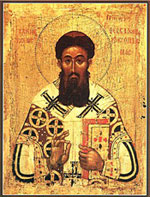
Thus, by studying biblical texts, Jung can reveal the phenomenology of the self. Was Jung religious person? Yes, he says in an interview. He doesn't need to believe like a common devotee because he knows. God is the archetype! Of course, Jung's psychologizing attitude to religion experience attracted attacks upon attacks. But his reply was not unexpected: as a psychoanalyst, he is interested in the experience of God in our psyche (soul). Jung was the son of a Protestant pastor. In this regard, he tells us how astonished he was when, asking his father if he had seen Christ, the latter was totally confused because he had not imagined that Christ could be seen. This incident, which outraged the young Jung, followed him all his life, provoking him to prove how God can be known and experienced even, if not directly, through the archetypes. If he had known the works of Gregory Palamas, he would have learned about the philosophy of uncreated energies and would have been surprised to find that the psychologization of religious experience is undoubtedly a theological subject. Because, yes, God can be known through archetypal phenomenology and experienced, therefore, as an archetype. These ideas cannot be supported in the Western world dominated by Catholicism and Protestantism. Unfortunately, Jung did not know Orthodox Christianity, which would have offered other perspectives to his studies. Notes: Resources: -- |
©AROPA, 2026