Carl Jung Resources > Archetypes > Wise Old Man
The Archetype of the Wise Old Man
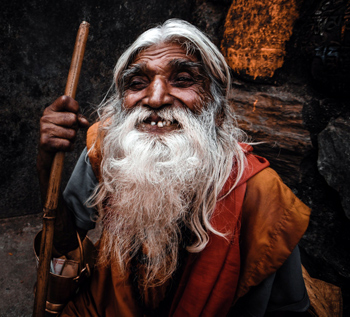
The Wise old man is the archetype of the spirit.
Its appearance is usually in dreams and folklore (fairy tales). In dreams, it appears in the form of an old man without a credible appearance but who turns out to be very wise even if sometimes it doesn't seem so.
He does not attract attention directly. Only when you know in advance that the old man, apparently ignorant and even insipid, is the holder of a special, superior knowledge.
He can clarify your ignorance. But you have to be patient, insistent and attentive to his "figures". Often his answer is enigmatic and then you have to have flair and empathy to catch the meaning.
The problem is to know how to formulate the question. Wise old man in Fairy Tales In fairy tales, the Wise old man appears in the most unexpected forms. And we should not be surprised if one of
his hypostases is even the trickster. At least one rhyme, he plays pranks on you, as if testing how much patience you have. Patience is the first virtue for him...
If you are patient, you will really have a pleasant surprise. The Trickster is a cunning and wise man. And he really knows all the answers. Wise old man at Work
An adage that illustrates the appearance of the Wise old man is related by Yang-tzu, one of Lao-tzu's disciples. Yang-tzu unexpectedly meets Lao-tzu at an inn. He greets him with due respect.
To his surprise, Lao-tzu says: - I used to be able to teach you a few things, but now I see that it is no longer possible. - Why? Yang-tzu asked in amazement.
Lao-tzu simply explained that the impression the younger disciple conveys is one of total self-satisfaction. So much so that no one wants to be near him. Yang-tzu frowns, intending to take on the master's criticism.
The wise old man is not always old. The idea of old suggests reputation, authority, wisdom, public recognition. Also, he always appears when he is needed... Read also:
Paper by J Jones |